Nothing Matters. Here's Why That's Good News

There is a thought that quietly visits almost everyone at some point in life, although very few people are willing to say it out loud. You look at the night sky, think about the billions of years that existed before you were born and the billions that will continue after you are gone, and a strange question emerges. Does any of this really matter? Not in the sentimental way we usually ask it, but in the deepest possible sense. If the universe is indifferent to my existence, if galaxies will continue expanding long after my name has disappeared, why should I care about any of this? Why keep trying? Why keep loving, creating, or hoping inside a reality that appears entirely unconcerned with whether I exist at all?
This realization often feels terrifying because we have spent most of our lives believing that meaning must come from somewhere outside ourselves. As children, our parents tell us what matters. Schools tell us what success looks like. Religions tell us why we exist. Cultures hand us identities before we have the opportunity to choose them. For much of our lives, meaning arrives already packaged. Then something changes. Perhaps a loss, a disappointment, or simply growing older forces us to notice that many of these inherited certainties no longer carry the emotional weight they once did. We discover that the world is not obligated to reassure us. It does not explain itself. It simply continues existing. That realization can feel like standing alone in an immense silence.
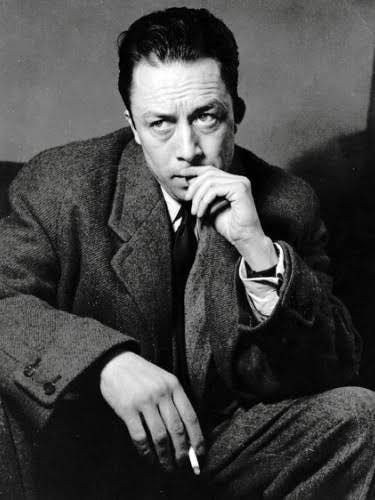
Albert Camus believed this silence is where philosophy truly begins. He argued that the central human problem is not suffering itself but the confrontation between two irreconcilable realities. On one side stands the human mind, endlessly searching for meaning, justice, and explanation. On the other stands a universe that offers none of these things voluntarily. Camus called this collision the absurd. Importantly, the absurd does not mean life has no value. It means the universe refuses to answer the questions we desperately keep asking it. We ask why innocent people suffer. Why love ends. Why death exists. The universe remains silent. The pain comes not only from suffering but from our expectation that reality should justify itself.
We suffer more from our inability to tolerate uncertainty than from the possibility that the answers might be upsetting.
People respond to this uncertainty in many different ways. Some find meaning through faith, others through philosophy, family, creativity, community, or personal values. These paths can offer genuine comfort and direction. Camus was not trying to take those away. He was asking a different question. Even if we have beliefs that guide us, there are still moments when life refuses to provide the answers we long for. A loved one dies unexpectedly. A diagnosis changes everything. A relationship ends without explanation. What do we do when reality remains silent despite our deepest questions? How do we continue living then?
The question, then, is what we are supposed to do with this silence. If the universe does not provide absolute meaning, should we invent comforting certainties? Should we surrender to despair and conclude that nothing matters? Camus believed both responses miss something essential. One escapes uncertainty by demanding final answers. The other mistakes uncertainty for hopelessness. His philosophy of the absurd offers a middle way. It asks whether we can stop demanding that life justify itself and instead learn to participate in it fully. Not because we have solved the mystery of existence, but because we have accepted that some mysteries may never be solved. This is where Camus believed freedom quietly begins.
