How Many Parents Do We Actually Have?

Nietzsche was four years old when his father died.
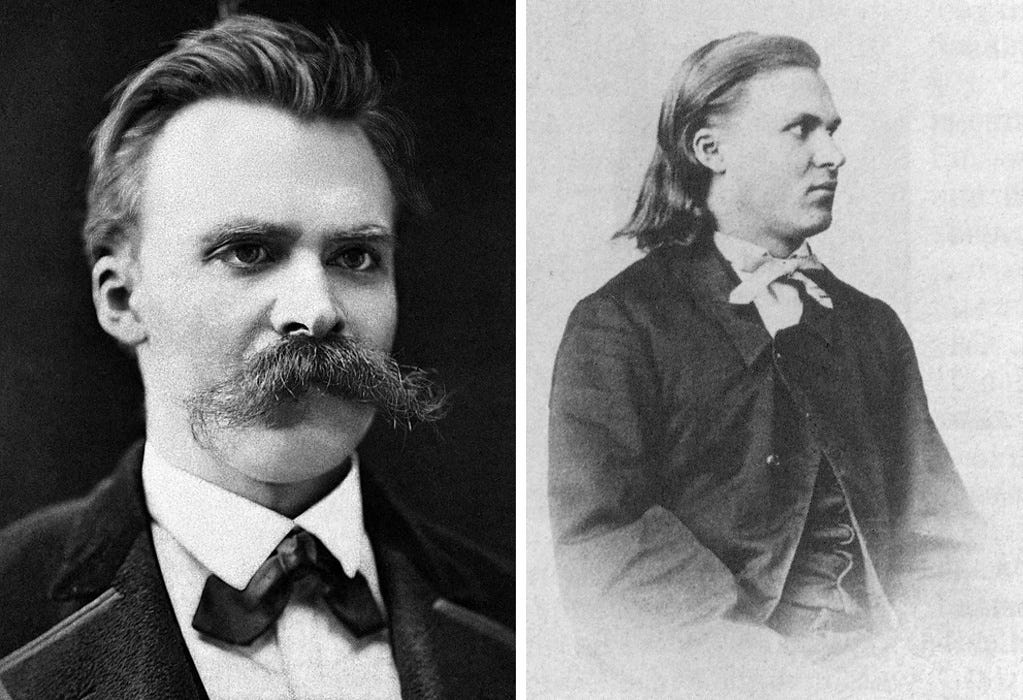
What people forget is what came after. He grew up in a house of women, his mother, his grandmother, his sister, two aunts, and still spent much of his adult life at a distance from her. She raised him inside a devout faith he would spend his life dismantling, and it wasn't only that she failed to understand the thinking he had become.
She could not accept it!
A mind that had grown into something fundamentally different from her own was not a mystery to be puzzled over. It was a threat to what she had built her life on. So it wasn't simply that a father was missing. A mother was present, and still an unbridgeable distance had opened between them, not for lack of love, but because acceptance asks something that understanding alone does not.
Out of that, Nietzsche wrote one of his most famous lines.
“Whoever has not got a good father should procure one.”
This sounds like defiance. Underneath it is something more desperate. If nobody hands you an authority to lean on, you can try to become that authority yourself. You become your own parent, your own judge, your own source of permission.
The psychological need here is obvious enough. Every child needs someone whose approval means something, whose presence sets a floor under the world. When that person is missing, the mind doesn’t simply accept the gap. It tries to fill it, often with itself. The solution feels like strength. Self-sufficiency. Needing no one.
Only in retrospect, after writing two books of Existential Dialogues, I realize that these were the conversations I had always wished I could have had with my father.
But this is also the dilemma. A parent you invent can never surprise you. Can never see something in you that you didn’t already know was there. The whole reason a parent’s gaze matters is that it comes from outside, from someone who isn’t you, who might notice what you’d have missed in yourself. Nietzsche solved the problem of the missing father by becoming his own, and in doing so, made sure he would never again be truly seen by anyone but himself.
Kafka refused that solution entirely.
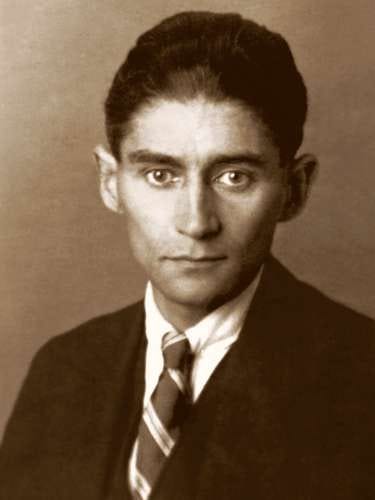
His father was not absent. He was overwhelming, loud, physically enormous in the room, and Kafka spent his life shrinking in front of him. His mother saw what was happening and chose peace with her husband over protecting her son, not out of cruelty, but the way people choose the path of least resistance when confrontation costs too much.
Here the psychological need is different. It isn’t the need to invent an authority. It’s the need to never again be that exposed. Once you’ve been truly diminished by someone whose approval you needed, a part of you concludes that needing anyone that much is the actual danger. So Kafka never went looking for a substitute. No mentor was ever allowed to matter as much as his father had.
“my respect for your opinion was such that my failure became inevitable."
This looks like caution. It might even look like wisdom, refusing to repeat an old wound. But the dilemma sits underneath it too. If you never again let anyone occupy that position, you also never again get the thing a parent is supposed to give you, the sense of being steadied by someone bigger than you, someone you didn’t have to build yourself. Kafka protected himself from repeating the injury and, in the same motion, sealed off the one kind of relationship that might have repaired it.
Jung took a third path, and it’s the one that reveals something the other two hide.
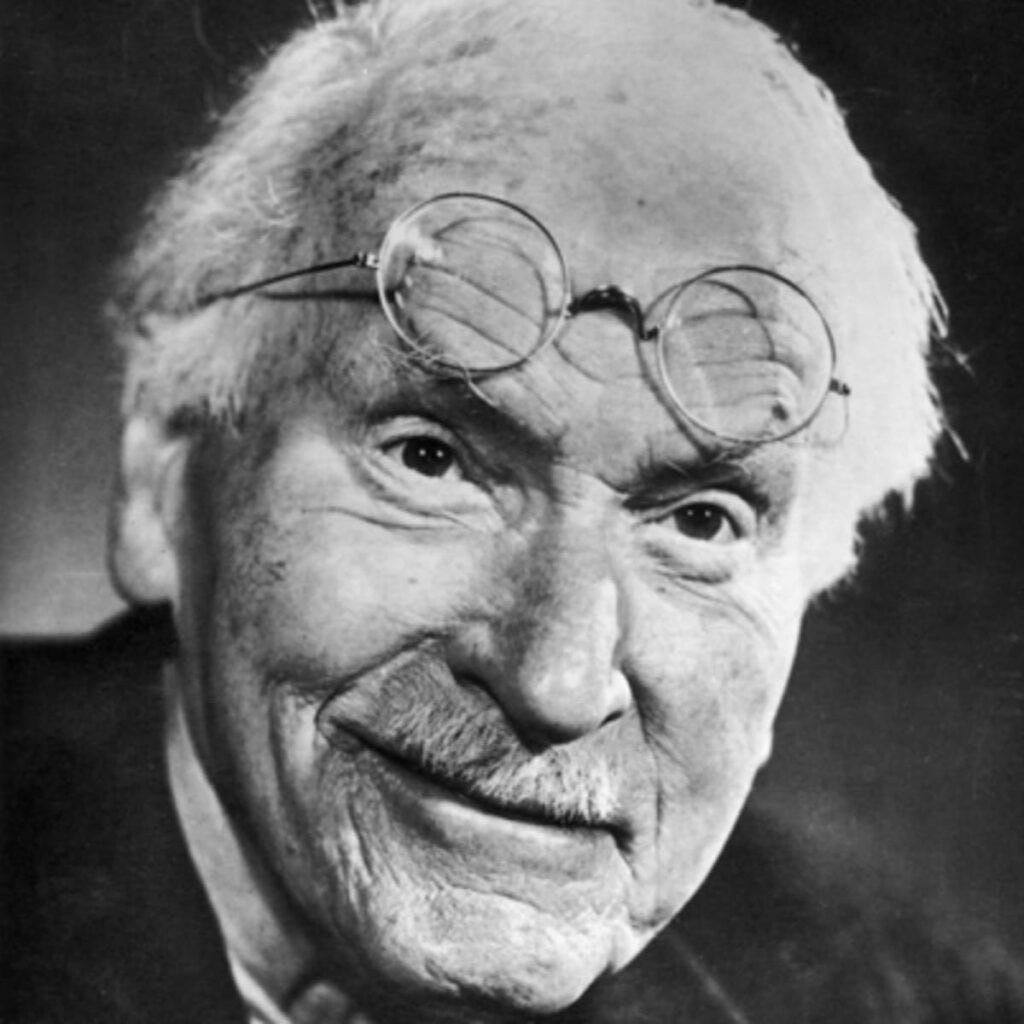
For him, the formative parent wasn’t his father, a pastor uncertain in his own faith. Jung was a deeply curious child, full of big questions, but his father was unable to help him find the answers. It was his mother, who he described as having two personalities, warm and ordinary by day, strange and unpredictable by night. Decades later, when he built his theory of the unconscious, of the hidden parts of the self we split off and don’t examine, it is hard not to hear his own mother inside it.
“Nothing exerts a stronger psychic effect upon the human environment, and especially upon children, than the life which the parents have not lived.”
And yet he went looking for a father figure anyway. He found one in Freud, older, certain, commanding, everything his own father wasn’t. For years he wrote to him like a son seeking approval. Then it broke, the way these things often do. Freud accused him of wanting to kill the father. Jung never spoke to him again.
The need Jung was answering wasn’t really about fathers at all. It was about authority itself, about wanting someone whose certainty he could borrow because his own mother’s instability had never let him fully trust his own perception of reality. Freud offered exactly that, for a while. But a borrowed authority is still borrowed. It has to be given back, or taken back, eventually. Jung did exactly what Nietzsche recommended, invented a father for himself, and discovered that inventing one doesn’t close a wound. It only gives the wound a new name, and a new person to lose.
Anna Freud chose a fourth path, and it might be the most difficult one to see clearly, because it doesn’t look like a wound at all.
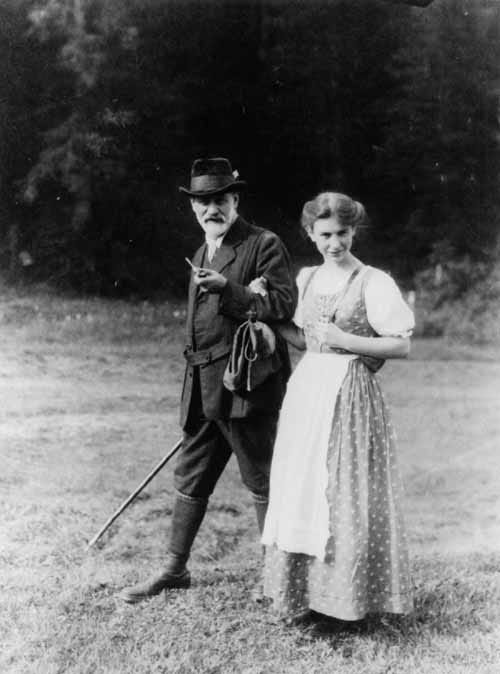
She never married. She built her career inside her father’s, lived beside him for almost her entire life, and in his final illness, she was the one who cared for him herself rather than leave it to anyone else. Where Nietzsche invented an authority, where Kafka refused to trust one again, where Jung found one and lost him, Anna Freud simply never allowed the separation to happen in the first place.
"I was always looking outside myself for strength and confidence, but it comes from within."
The need underneath this is perhaps the quietest of the four. Not the need for approval, or safety, or borrowed certainty, but the need to never test whether you could survive the loss at all. If you never fully leave, you never have to find out. Staying looked, from the outside, like devotion. It may also have been the most complete avoidance of the four, because it never had to confront the original absence. It simply made sure the absence never arrived.
Invent one. Refuse another. Find one and lose him. Or never leave to begin with. Four different answers to the same unbearable fact, that the parent we needed was never fully available in the way we needed them to be, and something in each of us had to be done about that. None of the four is a resolution. Each is a different shape the avoidance takes.
I think about my own list sometimes.
When I was in elementary school, there was a sports teacher who once asked us to shoot as many baskets as we could in a minute. Everyone stood directly in front of the hoop and shot straight on. I moved to the side and started banking the ball off the backboard, over and over again. From that angle, I realized I could make many more shots than by shooting straight at the hoop.
He stopped the class and said, “Look. Daniel is thinking.”
I don’t know why that sentence stayed with me the way it did. But something in me had been waiting a long time for someone to notice that, specifically.
Not that I was good. That I was thinking.
There were fathers of women I loved who taught me things about steadiness without meaning to. Men who came into my mother’s life for a year or two and left something behind when they went. None of them signed up for the role. Most of them probably don’t know they filled it.
Look at your own parents for a moment. Not the story you tell about them. What was actually there, and what quietly wasn’t. Most people, if they’re honest, cannot say they had two parents who were fully present, fully able to see them. That isn’t a tragedy. It’s closer to the rule than the exception, even if almost no one says it out loud.
And so we spend our lives doing something we rarely name. We keep finding people willing to stand, briefly, in the place that was left empty. A teacher who saw something. A partner’s mother who knew how to be steady. Someone’s father who taught you, without meaning to, what patience actually looks like up close. We let them in for a season, take what they have to give, love or strength or some way of seeing that we hadn’t been shown before, and then we move on, usually without ever telling them what they were to us.
Perhaps the task was never to resolve what wasn’t there. Some grief doesn’t close. It settles into a person the way a lake settles into a landscape, permanent, still, not going anywhere, and not asking to be emptied.
This is what it means to “live with the constant grief”, the way I wrote in Stare Into the Lake. To hold what I didn’t have, and still go on enjoying, with courage, the fruits and the love the world has to offer me. Not in order to erase the pain of the past, but in order to live, to choose, and to grow together with it. To let in more beautiful colors of existence.
How many meaningful parents do you actually have, if you look honestly?
The four paths you describe—invent, refuse, find and lose, or never leave—are not just psychological patterns. They are survival strategies that we carry into every relationship, often without knowing it.
What struck me most is the line: "Some grief doesn't close. It settles into a person the way a lake settles into a landscape." That is the part we do not talk about enough. We are told that healing means closure, that grief should end, that the wound should disappear. But for many of us, it does not. It becomes part of the terrain. It shapes how we see, how we trust, how we let people in.
The question of "how many parents do we actually have?" is not really about parents. It is about the people who stand in that gap for a season—teachers, partners, friends, strangers who see something in us that we had not yet seen in ourselves. And the grief is not that they leave. It is that we often never tell them what they were to us.
I find myself sitting with the question: what would it look like to let the grief settle without trying to drain the lake? To hold what was missing and still go on living, loving, and letting people in—not despite the absence, but alongside it.
The timing of this article- as we just lost my husband, i see not only the grief of my kids, my father and his parents.